
Military.com
How and Why Modern Warfare is Pushing Militaries Underground: An Interview With Traysar's Asher Katz
Asher Katz explains why drones, Iran and hardened underground networks are forcing militaries to reframe warfighting around survival.
The threat to military bases is increasingly coming from weapons that are cheap and plentiful. That problem came into sharp focus in October, when the U.S. moved B-1 bombers out of RAF Fairford in Britain after intelligence indicated a possible Iranian drone attack against the base.
In an interview with Military.com, Traysar co-founder and Chief Product Officer Asher Katz argued that modern militaries have become superb at striking targets, but keeping expensive aircraft, communications systems, ammunition and other critical infrastructure alive through a prolonged conflict is a different challenge.
“We get very excited by new toys, like, ‘Oh, look at this plane, look at this drone.’ But anyone who really understands military doctrine realizes that survivability and the ability to continue, that’s what wins wars.”
— Asher Katz
Survivability, Not Just Going Underground
Katz argues that commanders should look more closely at passive protection alongside active defenses. Buried infrastructure and equipment do not require an interceptor for every incoming threat. He emphasized that putting assets underground is only one part of survivability planning, alongside dispersal, camouflage, hardening and netting.
“It’s not like, OK, let’s move everything underground. Let’s put way more thought into survivability and our vulnerability as a force. Subterranean is just one component of it.”
— Asher Katz
An Ancient Domain
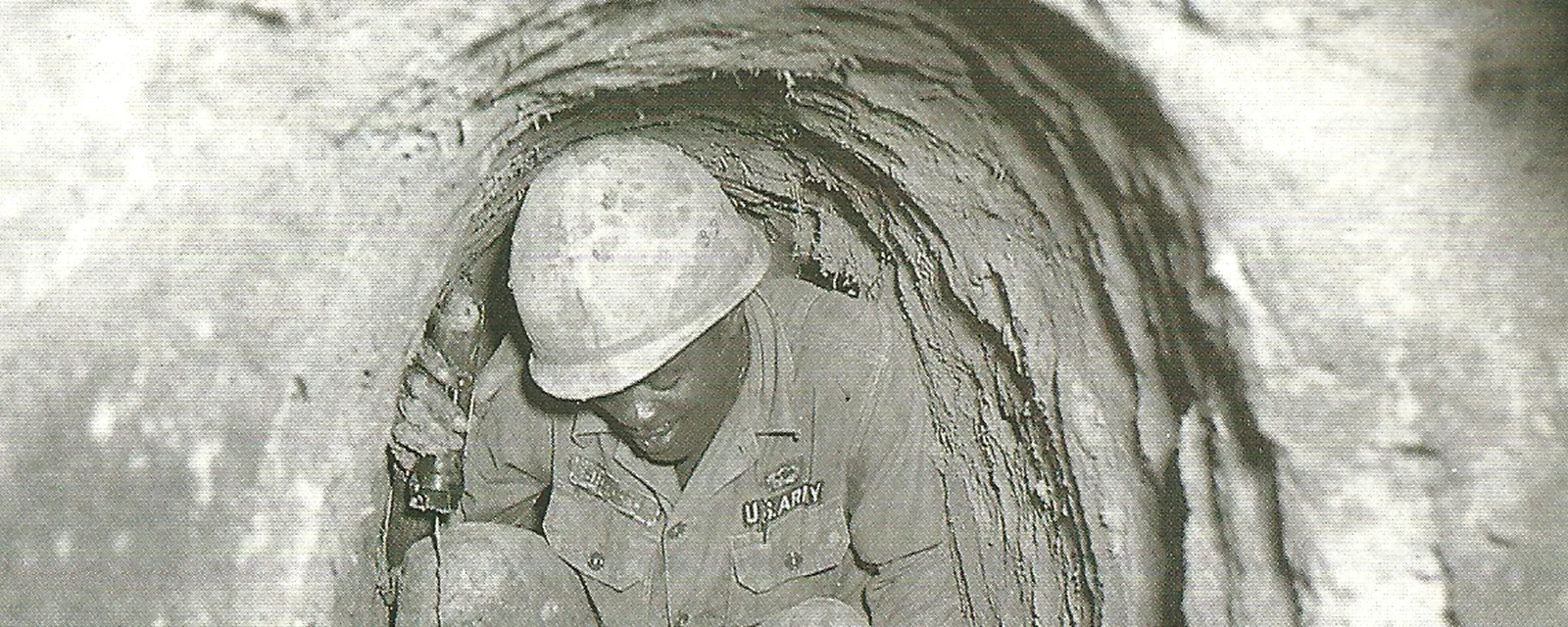
Katz describes “subterra” warfare as the use of underground terrain for protection, concealment, movement and access, tracing it from ancient siege warfare through World War I tunneling, Vietnam-era tunnel networks and the systems built by ISIS and Hamas.
“Underground is not a new domain of warfare. It’s a very, very ancient one. But it’s one that the advantages that it gives have never changed.”
— Asher Katz
The piece also covers how hard it remains to assess the effect of strikes on Iran’s hardened underground facilities, many of which were reopened after the 2026 conflict.
“We have to start talking about survivability, just like we’re talking about lethality.”
— Asher Katz
